The Seasonal Kitchen
Stories, ingredients, and ideas from the kitchen
Each month we’ll highlight seasonal ingredients, share cooking tips, and explore a few simple ways to bring those ingredients into your kitchen.
The first posts are coming soon.
Because great cooking starts with great ingredients.
-
![A plate with food on it, surrounded by green herbs, with the text 'April Blog' and the handle '@forkingwithjorge' in the background.]()
April Blog
The Month of Fresh Herbs: Cilantro
As spring arrives, fresh herbs begin to show up more frequently at markets and in home kitchens. One of the most vibrant herbs this time of year is cilantro, also known as coriander leaves.
Cilantro brings a bright, fresh flavor that instantly lifts a dish. It’s commonly used in cuisines around the world, from Indian and Mexican cooking to Mediterranean and Southeast Asian dishes.
When choosing cilantro at the market, look for:
• bright green leaves
• firm stems
• a fresh, citrusy aromaAvoid bunches that appear wilted or yellowing.
Cilantro is often used as a garnish, but it can do much more than that. When used thoughtfully, it can completely change the balance of a dish by adding freshness and contrast.
Below are three easy ways to use cilantro in your kitchen this month.
***Three Ways to Use Cilantro
Butter Chicken with Fresh Cilantro
Click here to View Recipe
Simply sprinkle a handful of chopped cilantro over the finished dish just before serving. The herb adds freshness and color that brighten the entire plate.
Cilantro Lime Rice
A simple side dish that works with almost any meal.
Serves
2–3
Ingredients
1 cup jasmine or basmati rice
2 cups water
½ lime (juice)
2 tablespoons chopped cilantro
1 tablespoon olive oil
SaltInstructions
Rinse the rice under cold water until the water runs clear.
Combine rice, water, and a pinch of salt in a pot.
Bring to a boil, then reduce to low heat, cover, and cook for 12–15 minutes.
Remove from heat and let sit for 5 minutes.
Fluff the rice with a fork and stir in lime juice, olive oil, and chopped cilantro.
This rice adds brightness and freshness to simple meals.
Cilantro Garlic Sauce
A quick sauce that works on grilled meats, vegetables, or roasted potatoes.
Ingredients
1 cup fresh cilantro
1 clove garlic
2 tablespoons olive oil
1 tablespoon lemon juice
Pinch of saltInstructions
Add cilantro, garlic, olive oil, lemon juice, and salt to a blender or food processor.
Blend until smooth.
Taste and adjust salt or lemon as needed.
Drizzle this sauce over roasted vegetables, grilled chicken, or even sandwiches for an instant boost of flavor.
***Chef Tip
Fresh herbs should almost always be added at the end of cooking. Heat can dull their flavor, so finishing dishes with herbs keeps them vibrant.
-
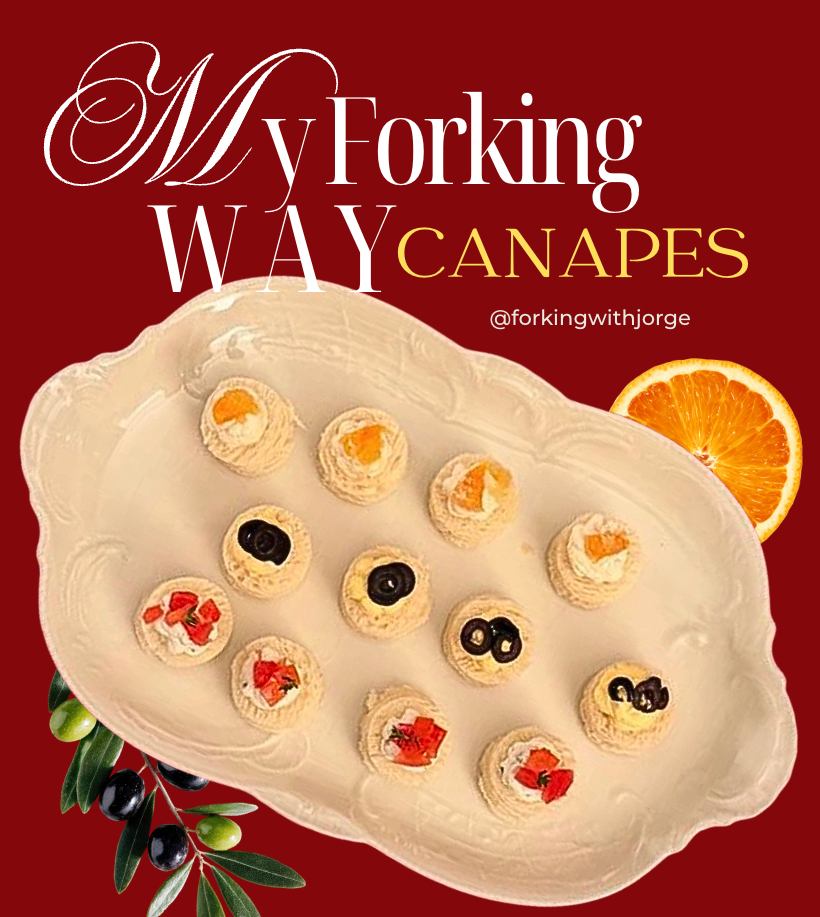
![A white decorative platter with small canapes topped with various toppings, including black and red olives, and orange slices, orange half on the side, with a red background and herbal garnish, and text that reads "My Forking Way CANAPES".]()
Classic Canapés
Classic Canapés
Canapés are small bites designed to deliver balanced flavor in a single bite. Traditionally they are built with a thin white bread base, lightly buttered to keep the bread from absorbing moisture, and finished with two components: a piped spread for flavor and texture, and a garnish that adds contrast and visual appeal.
Below are three simple examples that follow this classic structure.
Orange & Honey Canapé
A bright bite with citrus and sweetness.
Ingredients (makes about 10)
5 slices white sandwich bread
Soft butterFor the piped mixture
100 g cream cheese
1 teaspoon honey
1 teaspoon orange zestFor the topping
Thin slices of fresh orangeInstructions
Trim the crusts from the bread slices and cut each slice into two squares or triangles.
Lightly spread a thin layer of butter on the bread.
In a small bowl mix the cream cheese, honey, and orange zest until smooth.
Transfer the mixture to a piping bag and pipe a small rosette onto each bread base.
Finish with a small segment or thin slice of orange on top.
Black Olive Canapé
A savory Mediterranean-style bite.
Ingredients (makes about 10)
5 slices white sandwich bread
Soft butterFor the piped mixture
100 g cream cheese
1 tablespoon finely chopped parsley
1 teaspoon lemon juiceFor the topping
Black olives, thinly slicedInstructions
Remove the crusts from the bread and cut into small squares.
Spread a thin layer of butter over each piece of bread.
Mix the cream cheese, parsley, and lemon juice until smooth.
Pipe the mixture onto the bread bases.
Place one or two thin slices of black olive on top of each canapé.
Tomato Brunoise Canapé
A fresh canapé with bright flavor.
Ingredients (makes about 10)
5 slices white sandwich bread
Soft butterFor the piped mixture
100 g cream cheese
1 teaspoon olive oil
Pinch of saltFor the topping
1 ripe tomato, finely diced (brunoise)
1 teaspoon olive oil
Chopped basilInstructions
Trim the crusts from the bread and cut into small squares.
Butter the bread lightly to seal the surface.
Mix the cream cheese with olive oil and a pinch of salt.
Pipe a small amount of the mixture onto each bread base.
Toss the tomato brunoise with olive oil and basil.
Spoon a small amount of the tomato mixture onto the piped cream cheese.
-
![A promotional image for a May blog featuring a plate with strawberry shortcake, strawberries, and mint leaves, with a pink brushstroke background and strawberries and mint leaves decorated around.]()
May Blog
The Month of Strawberries
May is when strawberries truly start to shine. After months of winter produce, they bring a fresh sweetness that feels like the beginning of summer.
When strawberries are in season, they’re naturally sweet, fragrant, and full of flavor. The best way to enjoy them is to keep the preparation simple and let the fruit speak for itself.
When choosing strawberries at the market, look for:
• bright red color
• a strong strawberry aroma
• firm berries with fresh green topsAvoid berries that look dull or overly soft, as they tend to lose their flavor quickly.
Strawberries are incredibly versatile. They work just as well in fresh savory dishes as they do in desserts.
Three Ways to Use Strawberries
Strawberry Ricotta Toast
A simple breakfast or afternoon bite that feels like something you’d order at a café.
Toast a slice of good bread and spread it with fresh ricotta. Add sliced strawberries, drizzle with honey, and finish with cracked black pepper and a little lemon zest.
The creamy ricotta balances the sweetness of the berries and keeps the dish light and fresh.
Strawberry and Arugula Salad
A bright spring salad that works well as a starter.
Combine arugula, sliced strawberries, shaved parmesan, and toasted almonds. Dress lightly with olive oil, lemon juice, and a small drizzle of honey.
The peppery greens contrast beautifully with the sweetness of the strawberries.
Classic Strawberry Shortcake
When strawberries are at their peak, this simple dessert lets them shine.
Serves
4
Ingredients
For the strawberries
2 cups fresh strawberries, sliced
2 tablespoons sugar
1 teaspoon lemon juiceFor the shortcakes
1 cup all-purpose flour
1 tablespoon sugar
1 teaspoon baking powder
¼ teaspoon salt
3 tablespoons cold butter, cubed
½ cup milkFor serving
1 cup whipped creamInstructions
In a bowl, toss the sliced strawberries with sugar and lemon juice. Let them sit for 10–15 minutes so they release their juices.
Preheat the oven to 200°C (400°F).
In another bowl, mix flour, sugar, baking powder, and salt.
Add the cold butter and rub it into the flour mixture with your fingers until it resembles coarse crumbs.
Stir in the milk until a soft dough forms.
Shape into 4 small biscuits and place on a baking sheet.
Bake for 12–15 minutes until golden.
To assemble, split the biscuits in half, add a spoonful of strawberries, a dollop of whipped cream, and top with more berries.
Chef Tip
Letting strawberries sit with a little sugar pulls out their natural juices and creates a simple syrup that soaks perfectly into the shortcake.
When fruit is this good, the best recipes are often the simplest.
That’s the Forking Way.
-
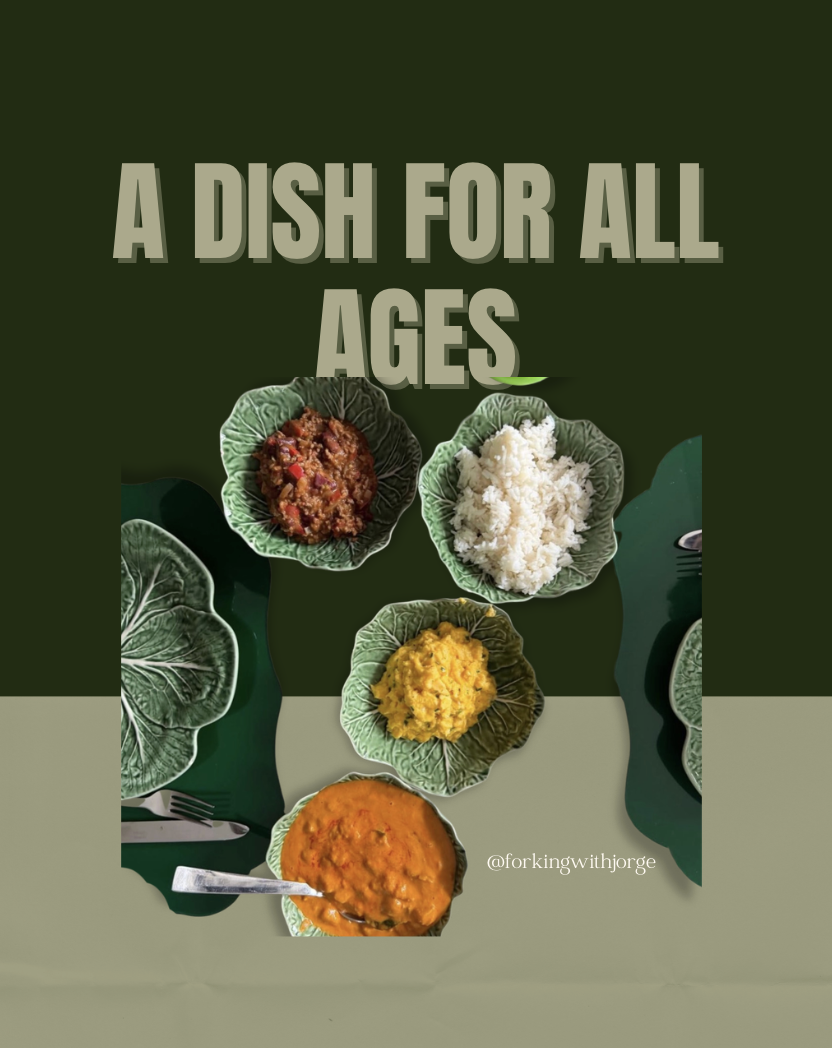
![Four bowls with different types of rice and curry dishes on a table with leaf-shaped plates and utensils, captioned 'A Dish for All Ages'.]()
A Dish for All Ages
Some meals just work for everyone.
The best dishes are often the ones that are simple, comforting, and balanced enough that anyone at the table can enjoy them. They don’t need complicated techniques or hard-to-find ingredients. They just need good flavors and a little care when cooking.
This dish is a great example of that idea. It’s warm, flavorful, and easy to adjust depending on who you're cooking for. Served with rice and a couple of simple sides, it becomes the kind of meal that works for family dinners, casual gatherings, or even meal prep for the week.
The star of the plate is butter chicken — rich, gently spiced, and creamy enough to feel comforting without being too heavy.
Paired with fluffy rice and a few simple sides, it becomes a meal that really does work for all ages.
Below is a simple way to bring it together.
Butter Chicken
Extras
Simple White Rice
Serves
4
Ingredients
1½ cups jasmine or basmati rice
3 cups water
Pinch of saltInstructions
Rinse the rice under cold water until the water runs clear.
Combine rice, water, and salt in a pot.
Bring to a boil, then reduce heat to low and cover.
Cook for about 12–15 minutes until the water is absorbed.
Remove from heat and let rest for 5 minutes.
Fluff with a fork before serving.
Yellow Lentils (Simple Dal)
Serves
4
Ingredients
1 cup red lentils
2 cups water
1 tablespoon olive oil
1 clove garlic, minced
½ teaspoon turmeric
SaltInstructions
Rinse the lentils thoroughly.
Add lentils and water to a pot and bring to a simmer.
Cook for about 15 minutes until soft.
In a small pan heat olive oil and sauté garlic.
Stir garlic and turmeric into the lentils.
Season with salt and cook another 2–3 minutes.
Tomato Vegetable Relish
Ingredients
1 tomato, diced
½ small red onion, finely chopped
1 tablespoon olive oil
1 teaspoon lemon juice
Salt
Black pepperInstructions
Combine tomato and onion in a bowl.
Add olive oil, lemon juice, salt, and pepper.
Mix gently and let sit for a few minutes before serving.
That’s the Forking Way.
-
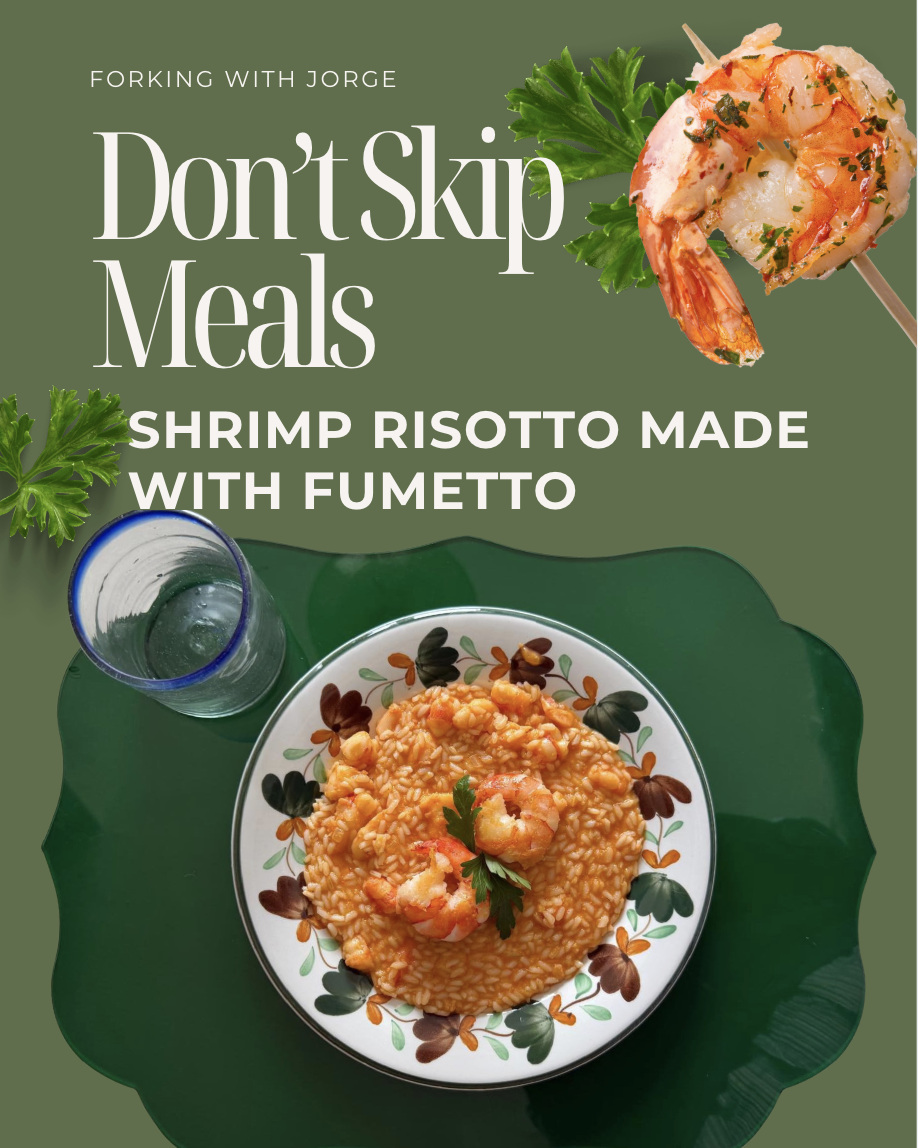
![Cover image of a food blog or recipe book titled 'Forking with Jorge: Don't Skip Meals.' The dish is shrimp risotto with fumetto, served on a decorative plate with black and orange flower patterns, garnished with parsley, and placed on a dark green surface. A glass of water and a prawn skewer with shrimp and herbs are also visible.]()
June Blog
Don’t Skip Meals
Shrimp Risotto made with Fumetto
This is absolutely my favorite risotto. Before attending culinary school, it always came out bland and unsavory. What I’ve learned during my tenure was how to make a fumetto to make the perfect broth.
The simplicity of the fumetto and how much it elevates the taste of the risotto result is forking amazing. Just by doing a simple mirepoix (cubes, around 1 cm, of a carrot, a stalk of celery, and an onion), olive oil, and a spoon of tomato paste, letting it cook on high heat until the bottom of the pot gets a brown color (smell is highly important at this stage; if it smells burned, you have cooked it too much), add the shrimp shells and heads and stir.
Deglaze with white wine and you’ll see all that brown from the bottom of the pot come up and add a huge amount of flavor. As soon as deglazed, add 1 liter of water and let it boil for around 30–40 mins.
Cut the shrimp into pieces and cook it in a pan with olive oil and some salt for 5/7 mins.
As for the rice, in culinary school I was taught several methods to cook it. My favorite, and the one I still use, is from Chef Tiziano Zuccheri: toast the rice in a pan until it smells like toasted grain, stirring it to toast them evenly. Now for the part and why I love this method: with a paddle, add enough fumetto to cover the rice and let the rice do his own business and absorb it. Once you drag the spatula in the bottom of the pan and there is very little liquid, add again, and do this 4/5 times, as this is enough to have the rice perfectly cooked. On the last ladle you add to the rice, add butter and grated parmesan (or pecorino) and stir until you can see a bit of cream, which is a mix of all the fumetto, rice starch, butter, and cheese.
Serve it while it’s hot. If you wait too much time, you’ll let the rice become too dry, and once it absorbs, you won’t be able to get the rice to release that forking great cream again.
You’ll see how your taste buds will have a forking party.
Yield
2–3 portions
Ingredients
For the Shrimp Fumetto
Shrimp heads and shells from 300 g whole shrimp
Carrot, small dice (about 1 cm) 60 g
Celery stalk, small dice 50 g
Onion, small dice 100 g
Olive oil 20 g
Tomato paste 15 g
Dry white wine 100 g
Water 1000 g
Salt, optional and very light if desired
For the Shrimp
Raw shrimp, peeled and deveined 180–200 g
Olive oil 10 g
Fine salt 2 g
For the Risotto
Carnaroli or Arborio rice 180 g
Shrimp fumetto, about 700–800 g, kept hot
Butter 30 g
Grated Parmigiano Reggiano or Pecorino 35–40 g
Instructions
1. Make the Shrimp Fumetto
In a pot, heat 20 g olive oil over medium-high heat.
Add:
60 g carrot
50 g celery
100 g onion
all cut into roughly 1 cm dice.
Add 15 g tomato paste and cook everything together until the vegetables soften and the bottom of the pot develops a deep golden-brown fond.
This is a key step. The goal is caramelized and savory, not burned.
Use smell as your guide. If it smells bitter or burnt, it has gone too far.
Add the shrimp shells and heads and stir well, letting them cook for 1–2 minutes so they release flavor.
Deglaze with 100 g white wine, scraping the bottom of the pot to dissolve all the browned bits.
Add 1000 g water and bring to a boil.
Lower to a gentle simmer and cook for 30–40 minutes.
Strain the fumetto through a fine sieve, pressing lightly on the solids. Keep the broth hot for the risotto.
2. Cook the Shrimp
Cut the peeled shrimp 180–200 g into bite-sized pieces.
Heat 10 g olive oil in a sauté pan.
Add the shrimp and 2 g salt.
Cook for 5–7 minutes, until just cooked through.
Set aside.
3. Toast the Rice
Place 180 g risotto rice in a wide sauté pan or risotto pot over medium heat.
Toast the rice dry, without fat, stirring often, until it smells like toasted grain or warm cereal.
The grains should be hot and lightly fragrant, but not colored.
4. Cook the Risotto
Once the rice is toasted, add enough hot fumetto to just cover the rice.
Let the rice absorb the liquid gradually, stirring occasionally.
When you drag a spatula across the bottom of the pan and there is very little liquid left, add another ladle of hot fumetto.
Repeat this process 4–5 times, always adding just enough liquid to cover or nearly cover the rice.
Continue until the rice is al dente and creamy, usually about 16–18 minutes total, depending on the rice.
5. Finish the Risotto (Mantecatura)
On the last addition of fumetto, once the rice is almost fully cooked:
Add:
30 g butter
35–40 g grated Parmigiano Reggiano or Pecorino
Stir vigorously until the risotto becomes creamy and emulsified.
Fold in the cooked shrimp.
6. Serve
Serve immediately, while hot and fluid.
Chef Notes
Rice choice: Carnaroli is ideal for structure and creaminess, but Arborio works too.
Fumetto amount: You may not use every gram of broth, but keep 700–800 g hot and ready.
Cheese choice: Parmigiano gives a rounder, nuttier finish; Pecorino gives more salt and bite.
-
![]()
July Blog
Gazpacho
Summer is here and with it comes the unfortunate heat waves we’ve been experiencing in Europe (damn you climate change), cooking and eating a hot meal can be quite energy draining. Gazpacho is a Spanish dish that is a great refreshing alternative for a hot summer day.
(4 servings)
1 kg of Tomatoes
1 Cucumber
1 Red Pepper
1 Jalapeno pepper (you can use other chillies for a hotter or milder taste)
1 Mid size blond onion
1 Garlic clove
Salt (t.t.)
White wine vinegar (t.t.)
Olive oil (t.t.)
Black Pepper (t.t.)
Ice cubes or very cold water ((⅘ ice cubes)
Chop all the vegetables (no precise cut needed), and add everything to a blender, add the vinegar, olive oil, salt, pepper, vinegar, and ice cubes or water.
You can add all the water, if you already know what amount you would like to add, or you can add little by little as you blend so you can have the consistency you are looking for.
After blending everything you have one of two options:
Strain the blended vegetables with a mid or big size sieve pressing it with a spatula in order to extract all the flavours from the vegetables, you will have a silkier texture and you can use the remaining solids as garnish
Don’t sieve to have a more granular soup.
Put it in the fridge to chill.
You can eventually cut other vegetables (cucumber/peppers/radish) to garnish your soup.
Melon Gazpacho
This is a sweet gazpacho alternative, the procedure is the same and these are the ingredients:
1 Melon or Cantelope (around 700g)
1 Shallot or red onion
1 Cucumber
1 Green pepper
2 tomatoes
1 garlic clove
Olive oil (t.t.)
Red wine vinegar (t.t.)
Salt (t.t.)
Black pepper (t.t.)
Very cold water or Ice cubes (4 - 5 Ice cubes)
Basil or Mint (t.t.)
Use melon cubes and mint or basil leaves to garnish the soup.
-
![]()
August Blog
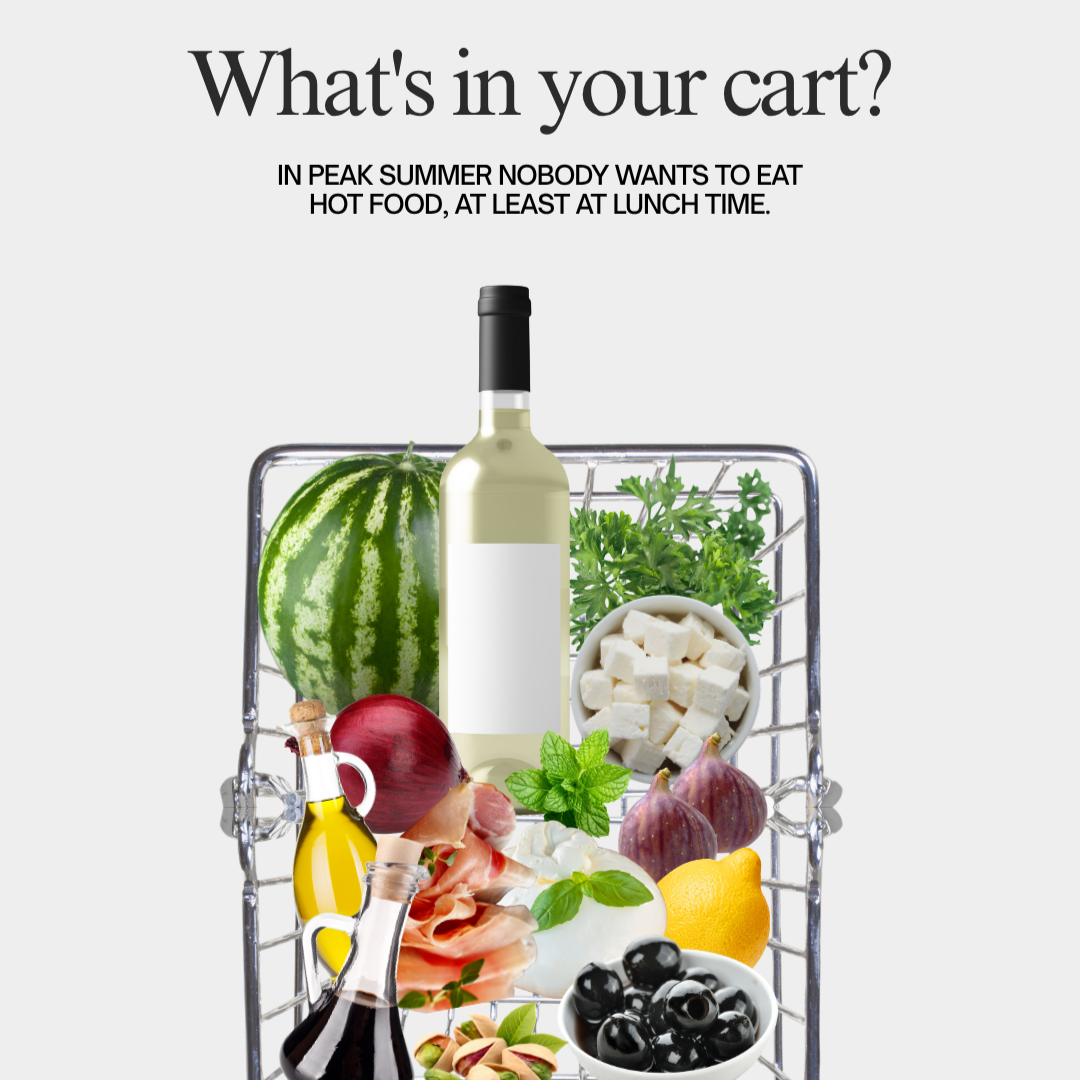
This month I am suggesting two salads using seasonal fruits.
Watermelon and feta salad
2 servings
300g watermelon (cut into cubes and pref. fridge cold)
200g Feta cheese
½ Midsize red onion
50g black olives (black olives are fundamental any other olives will overwhelm the taste of the watermelon)
Black pepper to taste
Olive oil to taste
Salt to taste
Parsley whole leaves to taste
Mint (chopped) to taste
Cut the watermelon into cubes as well as the feta cheese, add it to a salad bowl. Follow by adding the red onion thinly sliced and add the black olives (whole).
Follow by drizzling the olive oil, pepper and salt to taste and spread the parsley leaves and the chopped mint on top.
Put it in the fridge if not served immediately as it is a dish best served very cold.
Fig and prosciutto crudo salad
2 servings
5 / 6 figs (ripe but hard enough to slice)
5 Thin slices of prosciutto crudo
1 Burrata (or stracciatela)
30g of pistachios or cajun nuts
Balsamic vinegar cream (to taste)
Olive oil (to taste)
Salt (to taste)
Slice 4 figs and spread them on a plate, save the others for later. Shred the prosciutto and put it on top of the fig slices, followed by shredding the burrata spreading it on top of the prosciutto and figs.
Break the nuts into small pieces and spread it on top of the other ingredients, cut the other figs into pieces spreading them over the plate, drizzle olive oil and balsamic vinegar cream and spread a pinch of salt over the salad.